How to read SPSS output, p-value significance, Chapter 4 data analysis, quantitative results section, reject the null hypothesis, McKinley Research statistics.
“I Have the Data… Now What?” From Excel Chaos to Statistical Clarity
You spent months designing your questionnaire. You chased respondents for weeks. Finally, you have your dataset—a massive Excel sheet with thousands of rows and columns. And now, you are stuck. For many researchers (and business owners), this is the “Data Paralysis” moment. You know you need to find answers, but you don’t know whether to run a T-Test or an ANOVA. You’ve heard terms like “Structural Equation Modeling” (SEM), but you have no idea how to apply them. At McKinley Research, we speak the language of numbers so you don’t have to. Here is why the Analysis Phase is where your research actually comes alive—and how to navigate it. 1. Data Cleaning: The Step Everyone Skips Before you run a single test, you must clean the mess. We run rigorous Data Screening protocols to ensure your dataset is pristine before analysis begins. 2. Choosing the Right Tool (SPSS vs. AMOS vs. R) Not all software is created equal. 3. The “Hypothesis Testing” Game This is the moment of truth. 4. Interpreting the Output (The “So What?” Factor) Software gives you a table of numbers. It doesn’t tell you what they mean. 5. Visualizing the Model A dense table is boring. A Path Diagram is compelling. We create professional Path Diagrams that visually map out the relationships between your variables. These visuals are critical for PowerPoints and Thesis presentations, allowing your audience to grasp your model in seconds. Conclusion Statistics isn’t about being a math genius; it’s about finding the story hidden in the numbers. Don’t let a “fear of stats” delay your submission or your business decision. Contact McKinley Research’s Analytics Team today. Send us your Excel sheet, and we will send you back a Strategy.
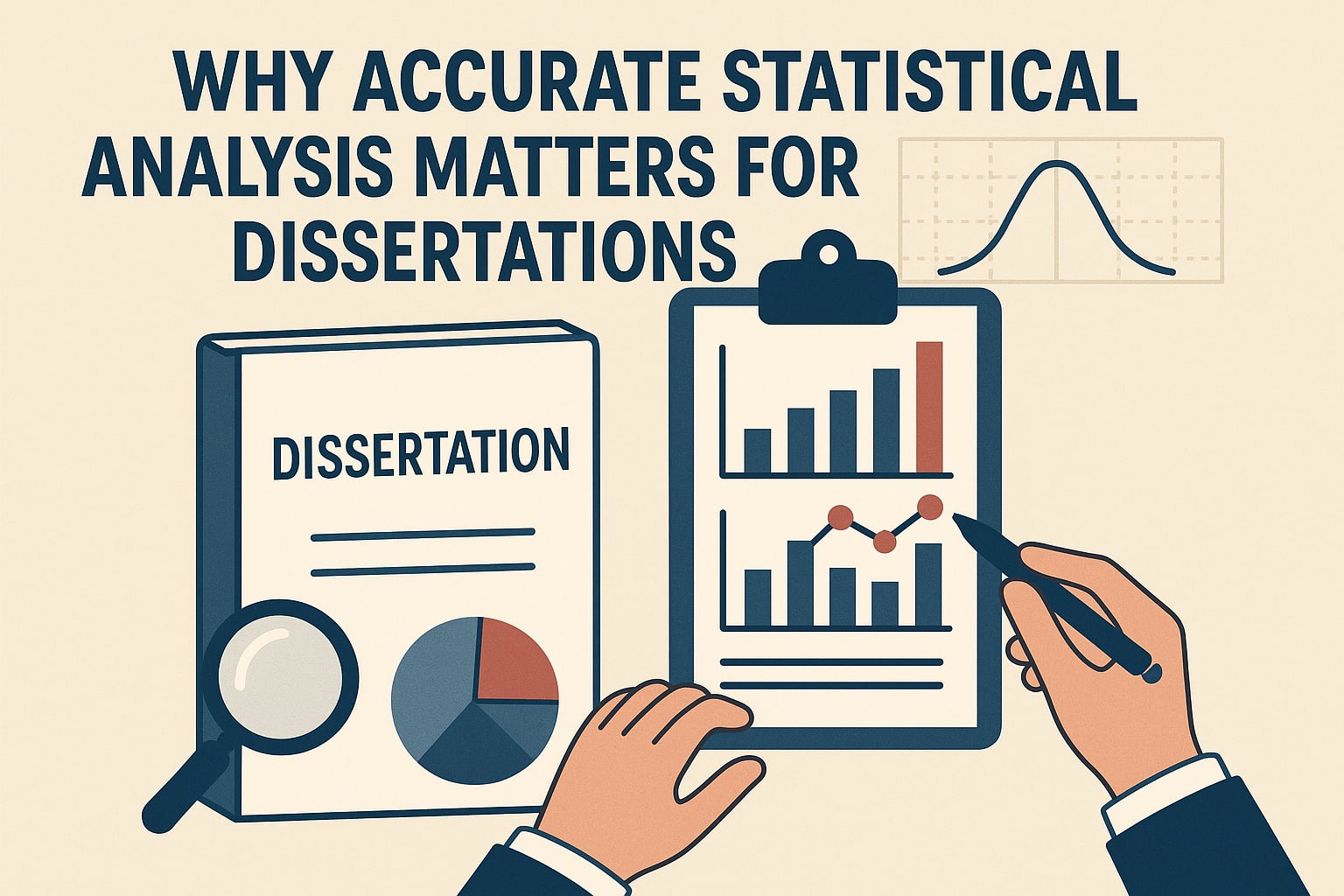
Drowning in Data? How to Master Statistical Analysis for Your PhD Thesis
SPSS data analysis services, SEM analysis using AMOS, statistical consulting for dissertation, hypothesis testing help, interpreting research results.